
What Screen Time Is Really Doing to Social Skills in Children
Excessive screen time can affect children’s social skills by reducing real-world interaction, shortening attention spans, and training the brain to expect constant stimulation. Real-world experiences are essential for developing communication, confidence, and independent thinking.
The Hidden Shift in How Children Are Growing Up
My take on this is simple.
Young people today aren’t struggling socially because they lack the ability. They’re growing up in a completely different environment, and that environment is shaping how they develop. More time is spent indoors, more time is spent on screens, and far less time is spent interacting face to face. That shift might not seem dramatic day to day, but over time it changes how young people learn to communicate, how they read situations, and how comfortable they feel around others.
Social skills are not something children pick up from being told what to do. They develop through experience. Through conversations that don’t go perfectly, through learning how to respond to other people, and through working things out in real time. When those opportunities become limited, development slows. It doesn’t stop, but it doesn’t build in the same way.
This is closely connected to a wider change in childhood, particularly when you look at how much time is now spent on devices.
👉 Screen Time vs Outdoor Play: What Children Are Missing Today
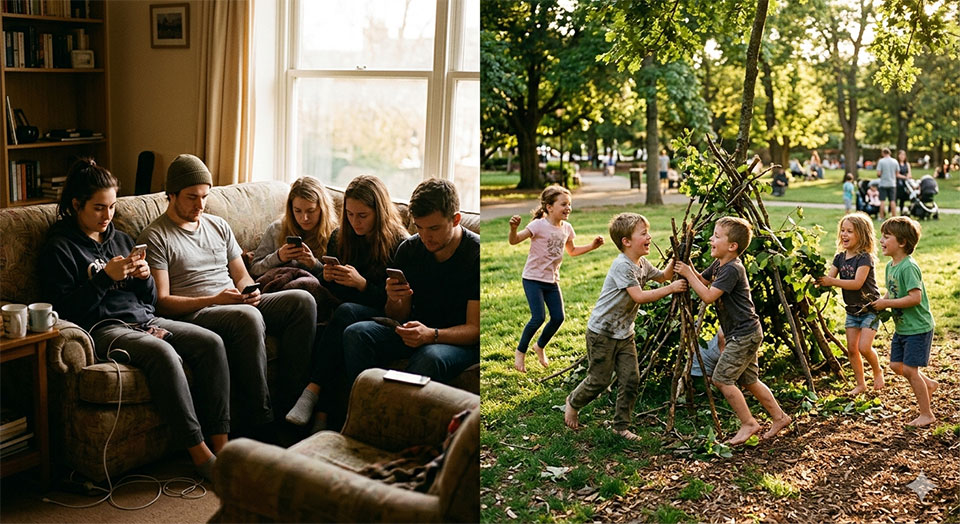
Social Skills Don’t Develop on Screens
There is a common assumption that digital interaction can replace real interaction, but that misses something important about how social skills are actually formed. Communication is not just about words. It is about tone, timing, body language, and subtle cues that people pick up without even realising. These are things that are learned through being around others, not through observing them on a screen.
Research from the University of California Los Angeles found that children who spent just five days away from screens showed a noticeable improvement in their ability to recognise emotions and social cues.
👉 https://www.sciencedaily.com/releases/2014/10/141021081824.htm
What stands out about that study is how quickly the change happened. It suggests that the ability is still there, but it needs the right conditions to be used and strengthened.
It’s Not Just Screen Time — It’s What It Replaces
Focusing only on screen time misses the bigger point. The issue is not just what young people are doing, but what they are no longer doing.
Time on devices replaces time that would otherwise be spent interacting, exploring, and engaging with the world. That might be playing outside, spending time with others, or simply having unstructured time where conversation and creativity happen naturally.
This idea is often explained through Displacement Theory. It is not that screens are harmful in isolation. It is that they displace experiences that are essential for development.
This is one of the reasons outdoor learning is becoming increasingly important in modern childhood.
👉 Why Outdoor Learning Is No Longer Optional for Children Today

Why Screens Are So Hard to Put Down
Part of the challenge is that screens are not passive. They are designed to keep attention.
They tap into the brain’s Dopamine reward system, which is responsible for motivation and reward. Each piece of content creates a sense of anticipation, and because the next piece is unpredictable, the brain stays engaged.
Over time, this creates an expectation of constant stimulation. Fast, varied, and easily accessible. That expectation then carries over into other areas of life.
What That Means in Real Life
When young people become used to that level of stimulation, everything else begins to feel slower by comparison. Conversations require more effort, listening takes more patience, and real interaction can feel less engaging.
This does not mean they are unwilling to engage. It means their brain has adapted to a different pace. Real life, which is naturally slower and more complex, becomes harder to settle into.
This also connects to emotional balance, as constant stimulation can make it more difficult to feel calm and focused.

What Happens When We Start Giving Skills Away
There is another shift happening that is less obvious, but just as important. It is not just about interaction. It is about what young people are no longer developing.
From teaching, I’ve started to notice a pattern.
When I introduce a new subject, I’ll usually start with a simple question. It’s not a test. It’s a way of focusing their brain on the subject.
“What do you think this is?”
I’m not looking for the right answer. I’m looking for them to engage. To think. To form an idea, even if it’s incomplete.
But now there is often a pause. And then, almost automatically, the phone comes out. Not to check a detail, but to find the answer.
So I stop them. I tell them, “I know what your phone will say. I want to know what you think.”
And in that moment, you can see the shift. There is hesitation, uncertainty, sometimes even a bit of discomfort. Because the process they would normally rely on is no longer there.
This is not just reliance. It is the gradual giving away of the ability to think independently.
You see it outside of education as well. Skills that used to be natural are no longer used. Remembering phone numbers, navigating without a map, working things out step by step. These abilities have not disappeared. They have simply been handed over.
And that raises a bigger question. If small skills are being given away without much thought, what happens when larger, more important ones follow?
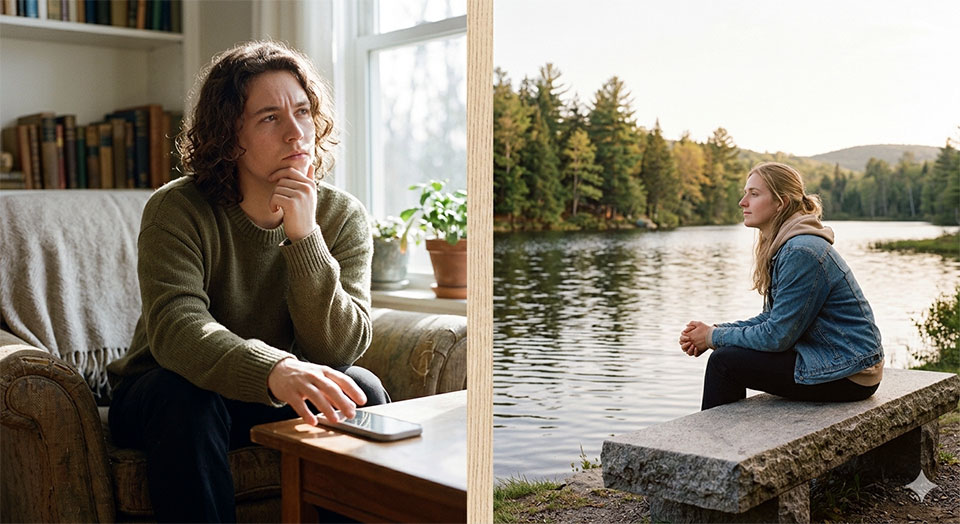
Why This Matters for Development
Thinking is not automatic. It is something that develops through use. It grows when people are required to work things out, to sit with uncertainty, and to form their own ideas.
When every answer is immediate, that process begins to fade. The concern is not that technology provides answers. The concern is that it removes the need to find them.
Over time, that affects confidence, decision-making, and independence. Without the experience of thinking things through, it becomes harder to trust your own judgement.
Why Boredom Still Matters
Boredom is often seen as something to avoid, but it plays an important role in development. When young people are bored, they begin to create, imagine, and explore. They engage with their environment rather than passively consuming it.
Screens remove that space. There is always something to watch, scroll, or respond to. Without those gaps, the opportunity for creativity and independent thinking is reduced.
Children at iCamp spend their time outdoors, engaging in real interaction rather than passive screen use.
Why iCamp Is Intentionally Unplugged
This is why iCamp is designed to be unplugged. Not as a restriction, but as an opportunity.
When young people step away from screens, they begin to re-engage with the world around them. They think for themselves, solve problems in real time, and interact more naturally with others.
They are not being told what to think. They are learning how to think.
What Happens in the Real World
In outdoor environments, there is no shortcut. You cannot search your way through a challenge or avoid something uncomfortable. You have to try, adapt, communicate, and learn.
This process builds confidence and independence in a way that cannot be replicated digitally.
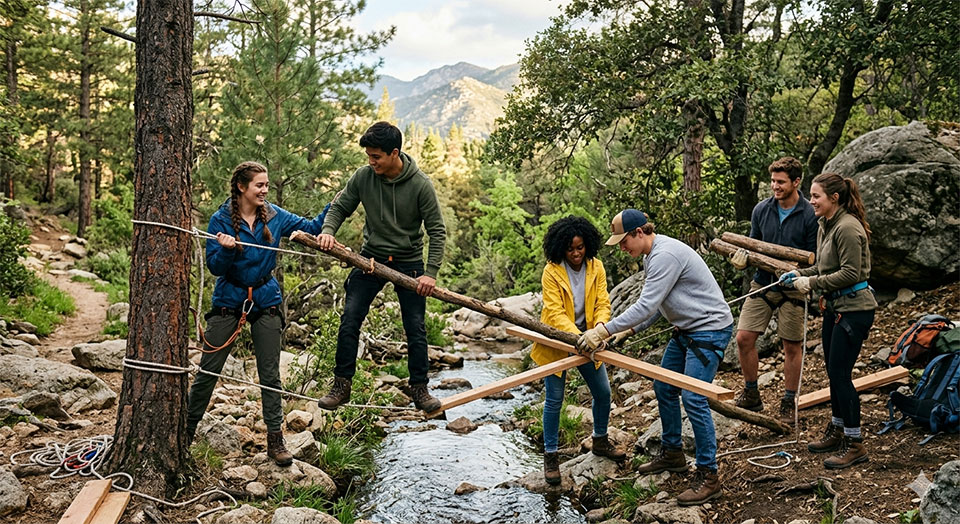
Why Outdoor Environments Make the Difference
Outdoor environments create conditions for real development. They require engagement, interaction, and problem-solving. They provide space for young people to develop naturally, without constant input.
Through this, social skills are not forced. They emerge.
The Long-Term Impact
If young people continue to spend more time in digital environments than real ones, the gap between the two grows. Not because the ability is lost, but because it is not being used.
And like any skill, without use, it begins to fade.

A Simple Way to Rebalance
This is not about removing screens completely. It is about balance.
Young people still need environments where they can interact, think, explore, and develop naturally.
Final Thought
Social skills are not taught. They are practiced.
And the environment determines how much opportunity young people have to develop them.
Frequently Asked Questions
Does screen time affect social skills in children?
Yes, it can. Social skills develop through real interaction, where children learn to read tone, body language, and emotion. When more time is spent on screens, there are simply fewer opportunities to practice those skills, which can slow development over time.
Why is face-to-face interaction so important for children?
Face-to-face interaction teaches things that can’t be fully learned through a screen. Children learn how to respond in the moment, how to handle awkward situations, and how to understand other people. These are the foundations of communication and confidence.
Is screen time actually harmful or is it just about balance?
It is more about balance than complete removal. Screens themselves are not the problem. The issue is when they replace time that would otherwise be spent interacting, exploring, and thinking independently. That is where the impact begins.
How does screen time affect attention and thinking?
Screens provide fast, constant stimulation, which can make slower activities feel more difficult. Over time, this can affect focus, patience, and the ability to sit with a problem and work through it. It is less about damage and more about what the brain becomes used to.
Are young people becoming too reliant on technology for thinking?
In some cases, yes. When answers are always instantly available, there is less need to work things out independently. This can lead to hesitation, lower confidence in decision-making, and a reliance on external input rather than personal judgement.
Why is boredom important for development?
Boredom creates space for creativity and problem-solving. When young people are not constantly entertained, they begin to imagine, create, and explore. Without that space, those skills have fewer opportunities to develop.
How do outdoor environments help social development?
Outdoor environments naturally create situations where young people have to interact, communicate, and solve problems together. These experiences are real, unstructured, and unpredictable, which is exactly what builds strong social skills.
Are outdoor camps beneficial for children’s social skills?
Yes. Camps provide a setting where young people are away from screens and fully engaged with others. They build relationships, learn to communicate, and develop confidence through shared experiences and challenges.
Join Us At iCAMP




Tags: screen time social skills children, effects of screen time on children, social development in children, outdoor play vs screen time, children communication skills, how screen time affects social skills in children, how to improve social skills in children naturally

BANGKOK HEAD OFFICE
Monday to Friday – 9 AM to 6 PM
94 UdomSuk Road, Kwang Nongbon, Khet Pravet, Bangkok 10250 THAILAND
Email : info@icampthailand.com
Tel: +66 (0) 2399-5400 ext 503
Line ID : @icampthailand
iCAMP visits (appointment only).
Address : 9/9 Moo 6 Tambon Klondo, Dan Makhamtia District, KANCHANABURI 71260 THAILAND